
- tek_electric
The Complete Guide to Planning an Electrical Panel Upgrade
Electrical systems installed decades ago were not designed to support today’s energy demands. Modern homes rely on high-wattage appliances, electric vehicle chargers, HVAC systems, tankless water heaters, induction cooktops, home offices, and smart automation platforms. When electrical demand exceeds panel capacity, the result can be nuisance breaker trips, overheating conductors, voltage instability, or even fire risk.
An electrical panel upgrade is not simply a capacity increase; it is a structural modernization of a home’s power distribution system. Planning the upgrade correctly requires load calculations, grounding verification, NEC compliance, and evaluation of future expansion needs. This guide explains the technical considerations involved and how to determine when an upgrade becomes necessary.
Understanding the Role of the Electrical Panel
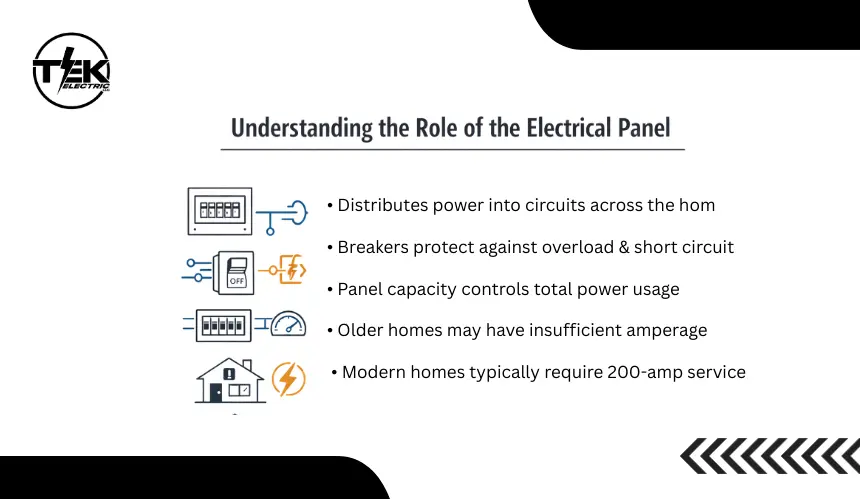
The electrical panel, often called the service panel or breaker box, distributes incoming utility power into branch circuits throughout the home. It houses circuit breakers that protect wiring from overload and short circuits.
Main Service Capacity and Amperage Ratings
Most older homes were built with 60-amp or 100-amp service panels. Today, 200-amp service is considered standard for residential construction. Larger properties or homes with electric heating systems may require 225-amp or 400-amp configurations.
Panel capacity determines how much electrical load the system can safely distribute at one time. When connected appliances exceed that capacity, breakers trip to prevent overheating.
Circuit Breakers and Overcurrent Protection
Breakers are calibrated to interrupt power when the current exceeds safe limits. Upgrading a panel allows for:
- Additional branch circuits
- Modern breaker technology
- Replacement of obsolete fuse systems
- Improved load distribution
New panels also support advanced protection devices required under current code standards.
When an Electrical Panel Upgrade Becomes Necessary
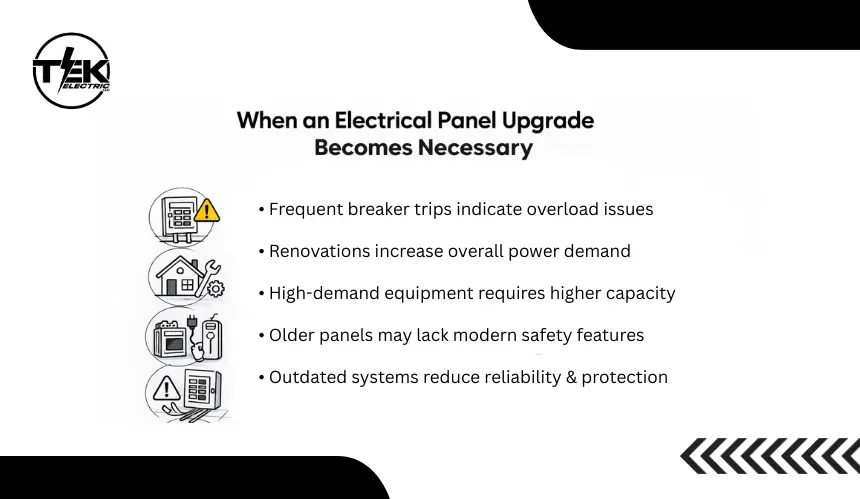
Panel upgrades are often triggered by increased demand or safety concerns.
Frequent Breaker Trips
Consistent breaker tripping may indicate overloaded circuits. Adding new appliances without recalculating load capacity places strain on the panel.
Home Additions and Major Renovations
Kitchen remodels, garage conversions, or added square footage significantly increase power consumption. Modern kitchens alone can require multiple dedicated circuits.
Installation of High-Demand Equipment
Equipment such as EV chargers, electric dryers, heat pumps, and induction cooktops requires substantial amperage. Without adequate service capacity, these additions compromise system reliability.
Aging or Obsolete Panels
Certain legacy panels are known for safety issues. Older fuse-based systems or discontinued breaker brands may fail to provide reliable protection.
In Reno, NV, many established neighborhoods contain homes built decades ago, where panel upgrades are common when properties are modernized.
The Importance of NEC-Compliant Load Calculations
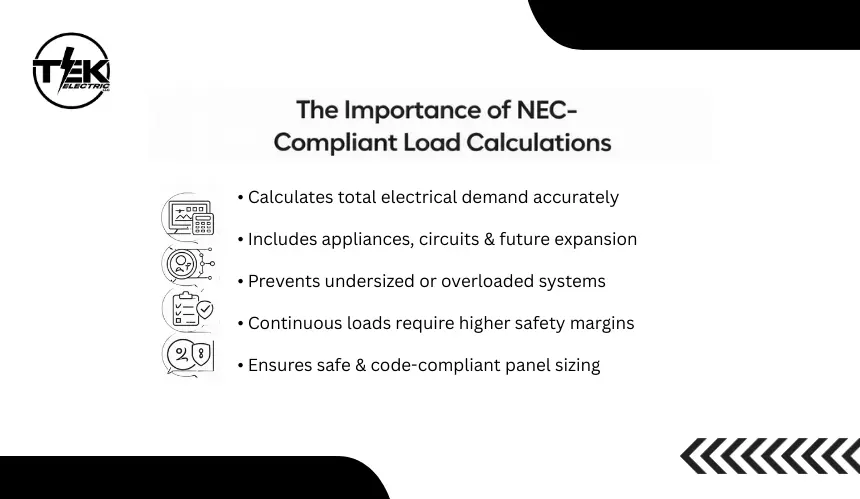
An electrical panel upgrade begins with precise load calculation based on the National Electrical Code (NEC).
What Load Calculation Includes
Load calculations assess:
- Square footage-based general lighting demand
- Fixed appliances (ovens, dishwashers, HVAC units)
- Dedicated circuits
- Continuous loads
- Future expansion planning
This calculation determines whether a 200-amp service is sufficient or if a higher capacity is necessary.
Continuous vs. Non-Continuous Loads
The NEC distinguishes between continuous loads (operating for three hours or more) and non-continuous loads. Continuous loads must be calculated at 125% of their rated capacity to ensure safe operation.
Proper load analysis prevents undersizing or oversizing the system.
Critical Components of a Panel Upgrade
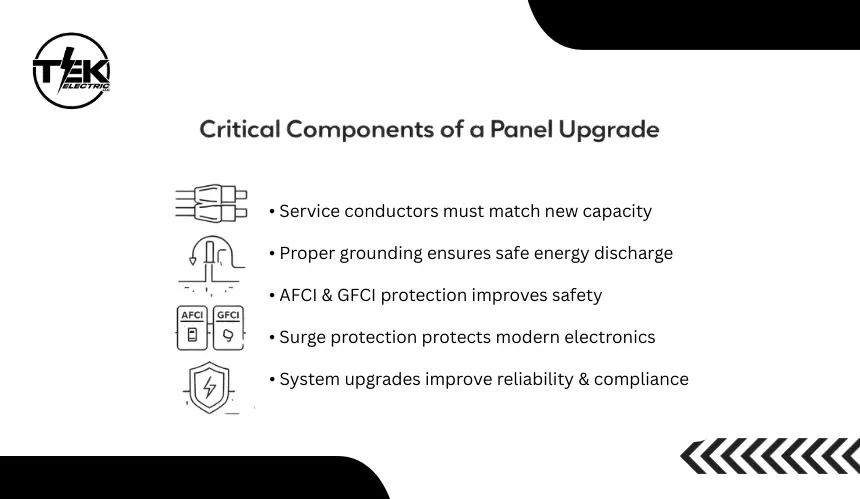
An electrical panel upgrade extends far beyond replacing a breaker enclosure. It requires a comprehensive evaluation of the entire service infrastructure, including load calculations, service-entrance conductors, grounding and bonding systems, meter-base compatibility, and branch-circuit distribution.
Service Entrance Conductors
Incoming utility cables must be rated for increased amperage. If upgrading from 100 amps to 200 amps, conductors and meter bases may also require replacement.
Grounding and Bonding Systems
Grounding ensures excess electrical energy is safely directed into the earth. Modern code requires proper grounding electrode systems, including ground rods and bonding connections to water piping.
Arc Fault and Ground Fault Protection
Current NEC standards mandate:
- AFCI (Arc Fault Circuit Interrupter) protection in most living areas
- GFCI (Ground Fault Circuit Interrupter) protection in kitchens, bathrooms, garages, and outdoor circuits
Upgrading the panel ensures these protections are integrated properly.
Whole-Home Surge Protection
Modern electronics are sensitive to voltage spikes. Installing panel-mounted surge protection devices adds an additional layer of defense against grid instability or lightning events.
Climate and Regional Electrical Considerations
Environmental conditions play a direct role in the design, sizing, and protection of electrical systems. Ambient temperature affects conductor ampacity and insulation performance, altitude influences heat dissipation, and regional weather patterns determine grounding, bonding, and surge protection requirements.
Dust, moisture, and seasonal temperature swings also impact enclosure ratings, breaker longevity, and connection integrity, making equipment selection and system layout critical for long-term reliability and safety.
Heat and Conductor Performance
High ambient temperatures reduce conductor ampacity. Attic-mounted wiring and panel placement must account for thermal conditions to prevent overheating.
Seasonal Power Demand
Extreme summer cooling loads or winter heating demands may strain older panels. Planning capacity based on peak seasonal usage ensures long-term reliability.
In Reno, NV, temperature swings between hot summers and cold winters require electrical systems capable of handling fluctuating HVAC loads.
Comparing Common Residential Panel Capacities
Service Rating | Typical Home Size | Suitable For | Future Expansion |
100 Amp | Small homes, older builds | Limited appliances | Restricted |
150 Amp | Mid-sized homes | Moderate upgrades | Moderate |
200 Amp | Modern standard | EV chargers, remodels | Strong |
400 Amp | Large homes, luxury builds | Heavy electrical demand | Extensive |
Choosing the correct capacity prevents repeated upgrades later.
Permit and Inspection Requirements
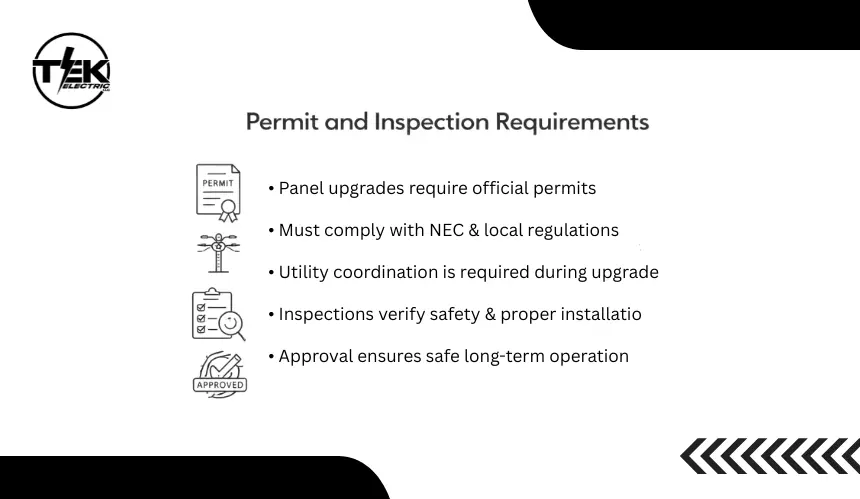
An electrical panel upgrade is classified as a major electrical modification and must comply with municipal building regulations. Permits are required because the service panel is the central distribution point of a home’s electrical system, and any changes directly impact safety, fire protection, and grid integration.
Local building departments review upgrade plans to ensure compliance with the current edition of the National Electrical Code (NEC), proper conductor sizing, grounding methods, and overcurrent protection standards.
Utility Coordination
An electrical panel upgrade involves coordination with the local utility provider because the service entrance conductors and meter base are tied directly to the utility grid. In most cases, the process includes:
- Scheduled temporary power disconnection
- Removal or replacement of the existing meter
- Upgrading service entrance cables if amperage increases
- Re-energizing the system after municipal approval
When upgrading from 100 amps to 200 amps, the utility may require upgraded service-drop wiring or meter-socket replacement to handle the increased load capacity. Proper scheduling minimizes downtime and ensures the new panel is safely integrated into the utility distribution system.
Final Inspection
In some jurisdictions, inspections occur in stages. If grounding electrodes, bonding connections, or service entrance conductors are modified, a rough inspection may be performed before walls are closed or the system is fully energized.
The final inspection is comprehensive and typically verifies:
- Proper grounding electrode installation (ground rods, bonding to water piping)
- Correct conductor sizing based on calculated load
- Breaker compatibility with panel manufacturer specifications
- Accurate circuit labeling for identification
- Installation of required AFCI and GFCI protections
- Secure panel mounting and code-compliant clearances
Only after passing inspection is permanent energization approved. This process confirms that the electrical panel upgrade meets safety standards and can handle projected demand without overheating, arcing, or overcurrent risks.
Frequently Asked Questions
How do I know if my home needs an electrical panel upgrade?
Frequent breaker trips, flickering lights, limited circuit space, or plans to install high-demand appliances are strong indicators that capacity may be insufficient.
Is 200 amps enough for most homes?
For many modern residences, 200-amp service provides sufficient capacity. However, homes with electric heating, EV chargers, or large additions may require higher ratings.
How long does a panel upgrade take?
Most residential upgrades are completed within one day, though permit approvals and utility coordination may extend the timeline.
Does upgrading the panel improve home value?
Updated electrical systems enhance safety, meet current code standards, and increase buyer confidence during resale inspections.
Are older fuse boxes safe?
Fuse systems can function safely when properly maintained, but they lack modern protection features and often cannot support contemporary load demands.