

- tek_electric
The Complete Guide to Hiring a Remodel Electrician for Home Renovations
Home renovations often focus on flooring, cabinetry, or structural changes, yet electrical infrastructure is one of the most critical components of a successful remodel. Modern homes require significantly more power capacity than properties built two or three decades ago. Appliances draw higher loads, smart home systems require stable wiring, and safety codes continue to evolve under the National Electrical Code (NEC).
Hiring a qualified remodel electrician ensures that upgraded spaces are not only functional but compliant, efficient, and safe. Electrical work during renovations involves load recalculations, panel assessments, circuit redesign, grounding verification, and code-mandated safety protections. This guide explains what to evaluate before hiring a professional and why electrical planning should be integrated early in any remodeling project.
Why Electrical Planning Must Be Integrated Into Remodeling Early
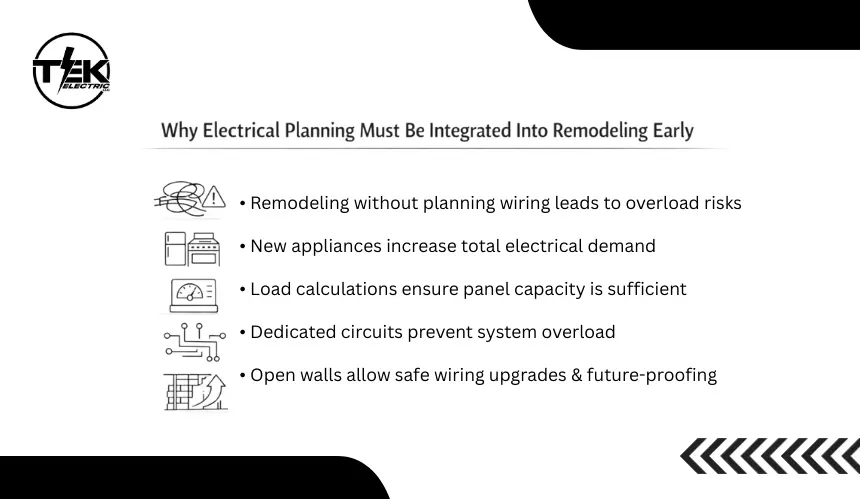
Electrical systems are foundational infrastructure. Altering walls, expanding kitchens, or converting rooms without reassessing wiring capacity can lead to overload conditions or future code violations.
Load Calculations and Service Capacity Assessment
Modern renovations frequently introduce:
- Induction cooktops
- Double ovens
- Tankless water heaters
- HVAC upgrades
- EV charging circuits
Each of these increases the amperage demand. A professional conducts NEC-compliant load calculations to determine whether the existing service panel (commonly 100A, 150A, or 200A) can handle added demand. If capacity is insufficient, a service panel upgrade may be required.
Circuit Redistribution and Dedicated Lines
Renovated kitchens, bathrooms, and home offices require dedicated circuits to prevent overload. For example, NEC guidelines mandate separate small-appliance branch circuits for kitchens and GFCI protection in moisture-prone areas.
Wall Access and Structural Coordination
During remodeling, walls are often open. This presents an opportunity to replace outdated wiring, improve grounding systems, and install additional conduit pathways for future upgrades.
Understanding Code Compliance and Permit Requirements
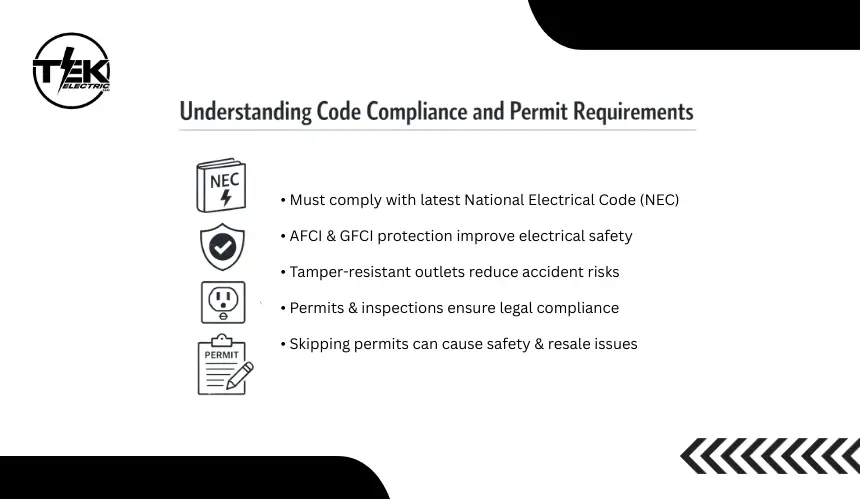
Electrical renovations are regulated by local building authorities and must comply with the latest edition of the National Electrical Code.
NEC Updates and Safety Mandates
Recent NEC revisions emphasize:
- AFCI (Arc Fault Circuit Interrupter) protection
- GFCI (Ground Fault Circuit Interrupter) requirements
- Tamper-resistant receptacles
- Surge protection integration
A qualified remodel electrician stays up to date on these changes to prevent inspection failures.
Permit Acquisition and Inspection Process
Electrical remodeling typically requires permits and staged inspections. Skipping this process may result in:
- Failed resale inspections
- Insurance complications
- Safety hazards
In Reno, NV, permit compliance ensures adherence to regional building regulations and inspection standards.
Evaluating Technical Qualifications Before Hiring
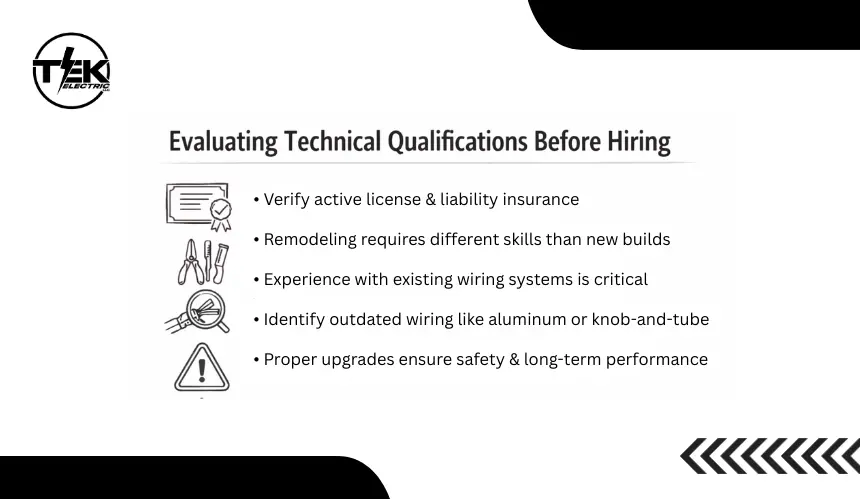
Experience alone is not sufficient; verification of licensing, insurance, and technical competency is essential.
Licensing and Certification
Electricians should hold active state licenses and carry liability insurance. Licensing demonstrates formal training, testing, and compliance with regulatory standards.
Experience in Renovation-Specific Electrical Work
Remodeling differs from new construction. It requires working around existing infrastructure, diagnosing legacy wiring systems, and upgrading components without compromising structural integrity.
Familiarity With Older Wiring Systems
Homes built in earlier decades may contain:
- Aluminum branch wiring
- Knob-and-tube remnants
- Undersized service panels
Identifying and correcting these systems ensures compatibility with modern electrical loads.
Electrical Upgrades to Consider During Renovations
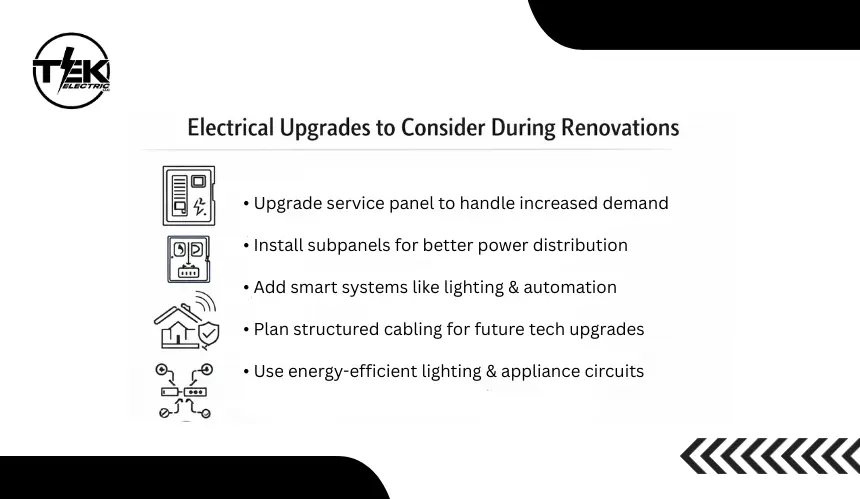
Remodeling creates a rare window where walls are open, infrastructure is accessible, and system upgrades can be integrated without demolition costs. This stage allows for expansion of panel capacity, additional dedicated circuits, conduit pathways for future technologies, and structured cabling for evolving smart systems. Planning electrical scalability during renovation reduces the need for invasive retrofits later and ensures the property can safely accommodate increased power demand, emerging appliances, and long-term technological advancements.
Service Panel Upgrades
If load calculations indicate limited capacity, upgrading to a 200-amp service panel may support future expansions, EV charging stations, or solar integration.
Subpanel Installation
Large homes or additions often benefit from subpanels that distribute power efficiently and reduce long branch circuit runs.
Smart Home Integration
Modern renovations frequently include:
- Smart lighting systems
- Automated blinds
- Integrated security systems
- Structured data cabling
Planning conduit routes during remodeling prevents costly retrofits later.
Energy Efficiency Improvements
LED lighting upgrades, occupancy sensors, and energy-efficient appliance circuits reduce long-term operating costs.
Climate and Regional Considerations in Electrical Remodeling
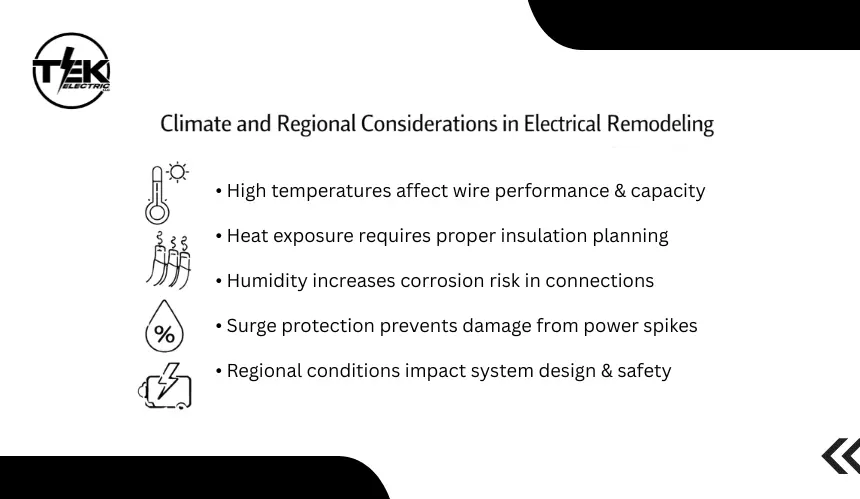
Environmental conditions directly impact conductor performance, insulation lifespan, load distribution, and protective device requirements. Ambient temperature affects wire ampacity ratings, humidity influences corrosion risk at connections, and regional weather patterns determine grounding, bonding, and surge protection strategies. Ignoring environmental variables during system design can lead to premature component failure, nuisance breaker trips, overheating, or long-term safety hazards.
Desert Climate and Heat Exposure
High ambient temperatures increase conductor resistance and may require adjustments to wire sizing. Electrical components installed in attics must account for elevated heat conditions.
Surge Protection and Grid Stability
Lightning storms and power fluctuations can damage sensitive electronics. Whole-house surge protection integrated at the panel level provides a layered defense.
In Reno, NV, seasonal temperature swings and regional power demands may influence panel sizing and protective equipment selection.
Red Flags to Avoid When Hiring
Electrical remodeling involves safety risks; selecting the wrong contractor can have long-term consequences.
Lack of Detailed Scope Documentation
Professionals should provide written project breakdowns outlining circuits added, panel changes, and safety device installation.
No Load Calculation Discussion
If a contractor does not mention load analysis when adding high-demand appliances, it indicates incomplete planning.
Avoiding Permit Discussion
Legitimate electrical work requires proper permitting. Avoid contractors who recommend bypassing inspection processes.
Frequently Asked Questions
How do I know if my service panel needs upgrading during a remodel?
A licensed electrician performs load calculations based on appliance wattage, square footage, and NEC guidelines. If projected demand exceeds current panel capacity, an upgrade is necessary.
Are GFCI and AFCI protections required in remodeled spaces?
Current code mandates GFCI protection in kitchens, bathrooms, garages, and outdoor circuits, while AFCI protection is required in most living areas to prevent arc-related fires.
Can older wiring remain during renovation?
Older wiring systems may remain if safe and code-compliant, but many renovations uncover outdated materials that require replacement for safety and capacity reasons.
How long does electrical work take during remodeling?
Timeline depends on project size. Kitchen remodel electrical work may take several days, while full-home rewiring may take multiple weeks, depending on the complexity.
Does remodeling increase home electrical value?
Upgraded panels, modern safety devices, and additional circuits improve safety, efficiency, and resale appeal.